Apr 2024–present
PhD Fellow
Center for Neuroplasticity and Pain · Aalborg University
Working with multiregion intracranial recordings, signal analysis, research data pipelines, and interpretable deep-learning models.
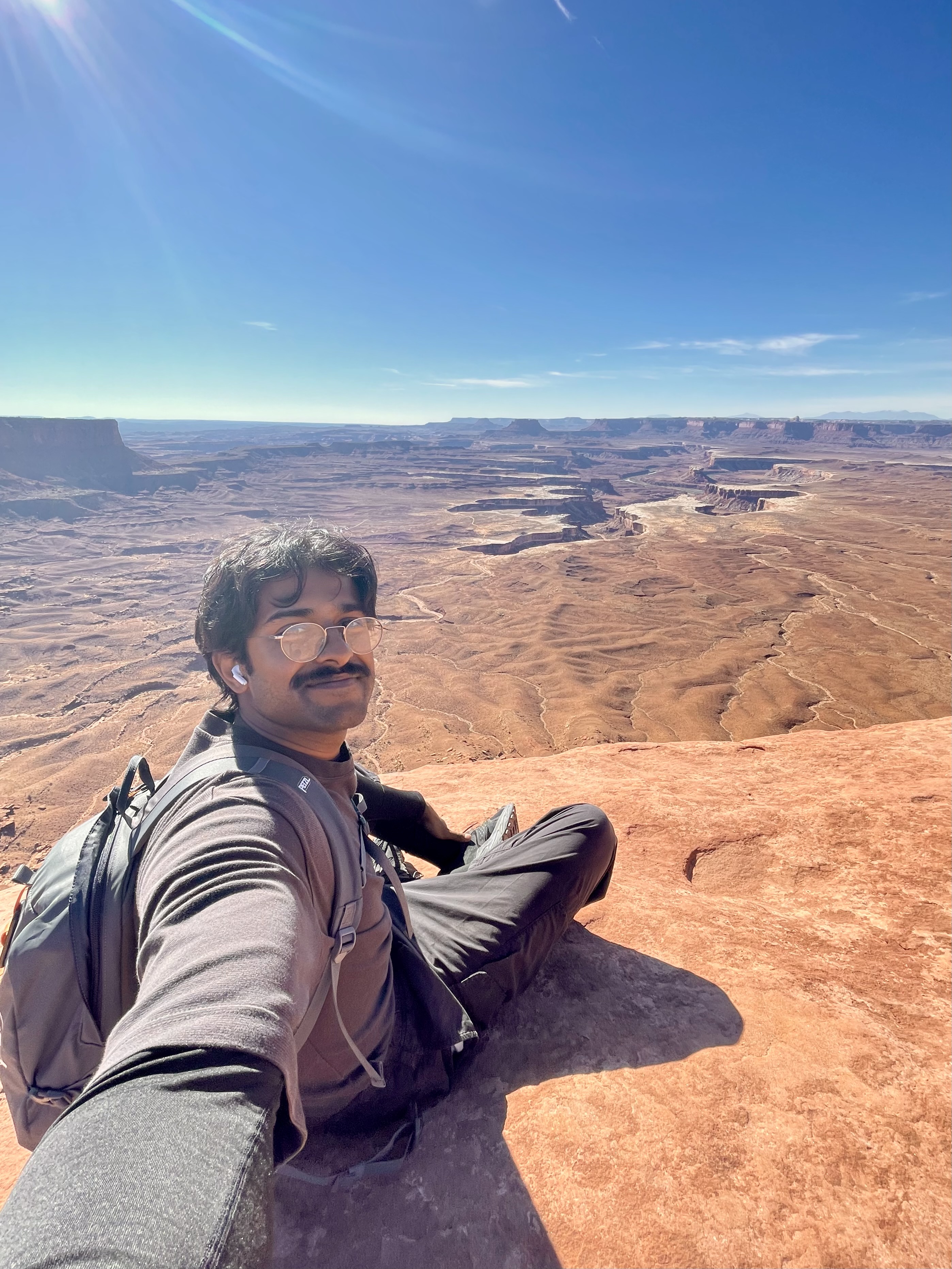
Nickolaj Ajay AtchuthanPhD Fellow · Aalborg University
I’m a biomedical engineer doing basic research at the Center for Neuroplasticity and Pain. My PhD combines experimental surgery, intracranial recordings and machine learning to study nociception, the neural processing of potentially harmful stimuli, in anaesthetised pigs.
In my free time, I learn by building machine-learning tools around my hobbies, sometimes for myself or friends, sometimes just to try an idea.
Center for Neuroplasticity and Pain · Aalborg University
My PhD combines graded ulnar-nerve stimulation in anaesthetised pigs with simultaneous intracranial recordings from S1, PFC, and an ACC-targeted depth array. We developed an approach to ACC access and electrode targeting using surgical landmarks and real-time electrophysiological guidance. I performed craniotomies, durotomies, and surface- and depth-electrode placement to acquire these recordings. I develop the supporting data and quality-control workflow, analyse cortical responses in time and frequency, and build interpretable deep-learning models with animal-level evaluation.
Center for Neuroplasticity and Pain · Aalborg University
Our Tucker-Davis Technologies (TDT) recordings did not fit neatly into the Python tools and data-sharing workflow I wanted to use. I started building a converter around the Brain Imaging Data Structure (BIDS), adapting its organisation to our animal recordings.
The pipeline reads TDT data into MNE-Python and keeps S1/PFC and ACC recordings in separate files to accommodate their different sampling rates. It currently saves FIF files with recording metadata and stimulation events in a BIDS-inspired layout, keeping recordings separate from processed outputs.
This is still in development. My aim is to make it reusable beyond our dataset, helping other TDT users prepare recordings for analysis and open-data sharing.
Grill Lab · Duke University
At the Grill Lab at Duke, I investigated how spinal cord stimulation waveforms change neural-fibre activation. Using Python and PyFibers, I simulated myelinated axons with an interpolated McIntyre–Richardson–Grill (MRG) model, representing nodal ion-channel dynamics and current flow through the myelinated fibre.
I compared tonic, FAST, and burst stimulation across fibre diameters, pulse widths, and active or passive charge balancing. I used bisection searches to estimate activation thresholds, then swept stimulation amplitude to examine how reliably each pulse produced an action potential. Spatiotemporal voltage maps let me inspect where spikes began, how they propagated, and when burst responses became irregular.
The simulations showed lower activation thresholds but less consistent firing with burst stimulation. This work became an IEEE EMBC 2025 paper.
The model explores possible mechanisms rather than predicting clinical outcomes.
I wanted to check whether a card in a shop was worth buying without manually searching several marketplaces. I used a pretrained DINOv3 vision transformer to index reference-image embeddings and retrieve matches by cosine similarity, with OCR to help resolve card identity. I also used 3D UMAP to inspect the embedding space.
After the user confirms a match, the app brings together available marketplace API prices and compares ungraded resale and graded-card scenarios against the sticker price, selling fees, grading costs, and configurable margin thresholds. Missing prices can be entered manually. It is a hobby project for comparing purchase options, not predicting resale returns.
2025
Nickolaj Ajay Atchuthan, Warren M. Grill, and Suzan Meijs · IEEE EMBC 2025
2025
Nickolaj Ajay Atchuthan, Felipe Rettore Andreis, Winnie Jensen, and Suzan Meijs · IEEE EMBC 2025
2025
Nickolaj Ajay Atchuthan, Mikkel Bjerre Danyar, Hjalte Færregård Clark, Felipe Rettore Andreis, Winnie Jensen, and Suzan Meijs · Research Square v1 preprint
2023
Nickolaj Ajay Atchuthan, Hjalte Clark, Mikkel Bjerre Danyar, Amalie Koch Andersen, Felipe Rettore Andreis, and Suzan Meijs · IEEE NER 2023
2023
Mikkel Bjerre Danyar, Hjalte Færregård Clark, Nickolaj Ajay Atchuthan, Louise K. Daugbjerg, Amalie Koch Andersen, Taseer A. M. Janjua, and Winnie Jensen · IEEE NER 2023
Apr 2024–present
Center for Neuroplasticity and Pain · Aalborg University
Working with multiregion intracranial recordings, signal analysis, research data pipelines, and interpretable deep-learning models.
Sep 2024–Dec 2024
Grill Lab · Duke University
Built Python models of neural-fibre responses to spinal cord stimulation, resulting in an IEEE EMBC 2025 paper.
Oct 2023–Apr 2024
Center for Neuroplasticity and Pain · Aalborg University
Developed explainable CNN analyses for intracranial recordings and evaluated RANSAC-based channel-quality methods. This work became the methodological starting point for the PhD.
Jan 2023–Jun 2023
TECHCOLLEGE
Taught practical informatics, technology, and applied problem solving to vocational students.
2025
Aarhus University
Advanced laboratory animal science training focused on using pigs in biomedical research. I took this course to support the experimental work in my PhD, including craniotomies, durotomies, and electrode implantation in anaesthetised pigs.
2024
University of Copenhagen
FELASA-accredited training covering animal procedures, project design, and animal care (EU Functions A, B and D). This provided the laboratory animal science foundation for my subsequent experimental surgical work.
2021–2023
Aalborg University
The first two projects were presented at IEEE NER 2023 in Baltimore.
2018–2021
Aalborg University
Bachelor project: thermotactile feedback. With two fellow students, I developed a prosthetic interface that conveys temperature through modality-matched thermal feedback. We followed the V-model from functional and non-functional requirements through prototype development, verification, and user testing. We were finalists in the Health HUB AAU Innovation Award 2021.
EMG-controlled hand prosthesis. Earlier project work combined muscle-signal control, analogue circuitry, and vibrotactile feedback, connecting biosignal processing with assistive-device development.
I enjoy photography, and hiking or climbing when I get to travel.